Pages

Friday, July 15, 2011

HOW CAN WE KNOW WHAT'S TRUE?


It's been a long time since I posted.  I've been busy thinking about how we can possibly  know what is true and what is not.  And I'm stumped.  One scholar says this, another seemingly equally valid scholar disagrees.  One scientific study may demonstrate one thing, but if a person does further reading, research can usually be found that contradicts the results of the first study...Which one is true?  And how can I, a mere common person without formal scholarly or scientific training, hope to ascertain what is a reliable source among many which seem valid?

The same holds true in Christianity.  There's been a search for the historical Jesus, and many respected scholars have widely differing viewpoints.  Which is true?  There is even a whole field of study (epistemology) that studies how we know what we know, and they don't even seem to know how we can know what we know...

People who study consciousness and the brain maintain that we don't actually perceive the world around us as it really is.  They say, for example, that there is no actual color green, but that light (which has no color) is filtered by our eyes in a certain way that we perceive (with the limited tools at our disposal) as the color green.

Dr. David Eagleman "is a neuroscientist and a New York Times bestselling author. He directs the Laboratory for Perception and Action and the Initiative on Neuroscience and Law at Baylor College of Medicine. He is best known for his work on time perception, synesthesia, and neurolaw."  I recently listened to a  Brain Science Podcast interview with Dr. Eagleman which focused on his most recent book, Incognito: The Secret Lives of the Brain. (As much as I can ascertain, both Dr. Eagleman and Brain Science Podcast are reputable sources :-). Dr. Eagleman shared the following information:

"In the book I spend a lot of time just sort of deconstructing reality piece by piece, and showing that, as we want to go on this journey of exploring what the heck we’re made out of, the first thing to do is to recognize that what you’re seeing out there is not actually reality. You’re not sort of opening your eyes, and voila, there’s the world. Instead, your brain constructs the world. Your brain is trapped in darkness inside of your skull,  and all it ever sees are electrical and chemical signals. So all the colors you see, and so on, that doesn’t really exist; that’s an interpretation by your brain.
"Just take as a quick example the fact that your eyes are always moving around in these rapid darting movements; and if you did that with a handheld video camera, it would look like a drunk person holding it, and the world would look very shaky. But our world doesn’t look very shaky, because all we’re actually doing is seeing an internal model of the world; we’re not seeing what’s out there, we’re seeing just our internal model of it. And that’s why, when you move your eyes around, all you’re doing is updating that model.  And for that matter, when you blink your eyes and there are 80 milliseconds of blackness there, you don’t notice that, either. Because it’s not actually about what’s coming in the eyes; it’s about your internal construction….
 "…[There’s also what’s called the ‘illusion of truth’  - where people think something’s true just because they have heard it before].  You give people statements to rate the truth value of, and then you bring them back a while later and you give them more statements to say whether they’re true or false, and so on. But it turns out that if you repeat some of the statements from the first time to the second time, just because the people have heard them before, whether or not it’s true and whether or not they even marked it as false last time, because they’re hearing it again—unconsciously they know they’ve heard it before—they’re more likely to rate it as true now.
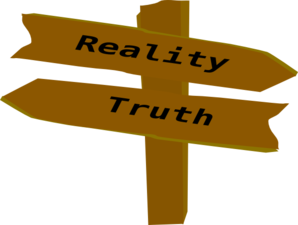
Dr. Eagleman confirms some other authors I have read on our perceptions of reality. I have actually noticed this "illusion of truth" in myself - the tendency to think I know about a subject because I've done some reading about it previously.  (I'm glad to know that's normal - I think!)  But I guess the questions I'm really trying to answer are:  What is the nature of Reality? How can I know what's true?  How can I tell what's real?  And the answer, as near as I can tell, is that we really don't know.  Much of the time, things may not be as they appear to us with the limited tools of perception that we are equipped with.  So how can I, an untrained person, know what's true, or even which source is reliable? Anybody out there have any advice?

Wednesday, May 4, 2011

I COULD BE WRONG

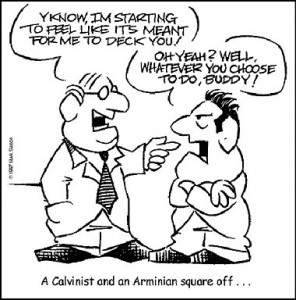
Lately, I’ve been pondering the direction of the spiritual path.  My own journey is taking me from the fundamental toward the liberal.  And from what I read on the internet, many others seem to be on this same trajectory.  But I’ve encountered a few who seem to be traveling in the opposite direction.  In fact, “Religious fundamentalism has risen to worldwide prominence since the 1970s” (Annual Review), and "in March 2009, TIME magazine ranked the new Calvinist movement as one of the '10 Ideas Changing the World Right Now.'"  What to make of these, and other, movements of the Spirit in apparently opposite directions?

When I first began to see from a different perspective, I thought I had been misled.  I had believed lies, I thought, but was now seeing the truth.  Those fundamental beliefs I had previously held were wrong, but now I was on the right track.  Truthfully, the only thing that really happened was I moved into a new place of being judgmental!  Yes, I admitted I’d been wrong.  But, I reasoned, it wasn’t my fault – it was all those lies I’d been taught! NOW, though, I was following the Spirit, and I was RIGHT.  Truth with a capital “T” once again! Meanwhile, of course, some of a more liberal bent across the country and throughout the world had been discovering new-found truth in conservative ideas…

Gradually (and thankfully!), I moved into an understanding of the stages of spiritual growth and that we’re not necessarily right or wrong, but at different places along the path.  From that perspective, I’d like to present a possible explanation for these movements of the Spirit in seemingly opposite directions. 

Growth cannot take place without change, and change is a prerequisite for spiritual growth as well. So, whatever camp we’ve been in, whatever our beliefs have been, there has to be a willingness to change our previous positions before we can progress!  So (and this is a biggie!) we must admit that we’re wrong!  I think this is the toughest thing ever to ask our egos to do - admit we've been wrong, leave that ground of certainty, and strike out into unknown territory.

After error is finally seen and admitted, the next response is usually (like I did) to stake out a new “right” stand, and the process must begin all over again.  It’s very painful to admit error, and I believe that’s one among many of the reasons that the transition between stages can be a excruciating time on the spiritual journey – so much so that they’ve sometimes been termed “dark nights of the soul.”   These are “dark nights” because they’re a period of leaving behind what we’ve known and been sure of to enter into uncertainty (or unknowing, as the author of the Cloud of Unknowing put it).  Hopefully, we emerge from this process with a new humility, a fresh realization that we must hold our truths loosely, and a new-found ability to embrace mystery.

At this point it would seem to me that the greatest asset on the spiritual path is humility – the ability to realize I could be wrong.  Then again…I COULD BE WRONG!

Have you ever discovered that you had been wrong?  Did it lead to growth?

Tuesday, May 3, 2011

SCIENCE AND SPIRITUALITY

I don't have a scientific background, but I am very much interested in the topics of science and spirituality.  I recently watched a program on Global Spirit TV (lots of good programs there, by the way) in which Peter Russell was interviewed on the topic of exploring consciousness.  Intrigued, I followed up by visiting his website (which can be found here) where I found a wealth of informative material.  Today I'd like to share the following video from his website titled "Science and Spirituality." While I don't even begin to have a working knowledge of the topic, I do find it facisinating.  And I believe that science and spirituality are not in opposition, but that both can give us glimpses of how to better relate to Reality.

Fast forward to minute 2:45 if you want to skip the intro.


Do science and spirituality oppose one another? What are your thoughts?

LOVE YOUR ENEMIES


"How do you kill your enemy in a way that puts a stop to violence rather than escalates it?

"One of us is gone, one apparently horrific, terrible, vicious one of us...is gone...I'm regretful for the rest of us who are now left thinking that this is a cause for celebration.  It is not.  It is a cause for sorrow at our continued inablility to realize that there is no such thing as us and them; that whatever we do to cause harm to one will harm us all.

"When we hate, we cause hate.  When we think we have won by vanquishing our enemy, we have lost.  In killing Osama bin Laden, 'they' lose because one of their leaders is gone.  But we lose too, because we have deepened the causes and conditions that lead to more hatred and its consequences."


"...when you do not produce another force of hatred, the opposing forece collapses."  - Chogyam Trungpa

Excerpted from: "Osama bin Laden is Dead One Buddhist's Response" by Susan Piver.  Read the entire post here.

Thursday, April 21, 2011

RICHARD ROHR: SACRIFICE OF THE FALSE SELF


"The sacrificial instinct is the deep recognition that something always has to die for something bigger to be born.  We started with human sacrifice (Abraham and Isaac), we moved to animal sacrifice (the ritual killing of the Passover lamb described in Exodus 12), and we gradually get closer to what really has to be sacrificed—our own beloved ego—as protected and beloved as a little household lamb!  We will all find endless disguises and excuses to avoid letting go of what really needs to die.  And it is not other humans (firstborn sons of Egyptians), animals (lambs or goats), or even “meat on Friday” that God wants or needs.  It is always our false self that has to be let go, which is going to die anyway.

"By becoming the symbolic Passover Lamb, plus the foot-washing servant in John’s Gospel, Jesus makes the movement to the human and the personal very clear and quite concrete.  It is always “we,” in our youth, in our beauty, in our power and over-protectedness that must be handed over.  Otherwise, we will never grow up, big enough to “eat” of the Mystery of God and Love.  It really is about 'passing over' to the next level of faith and life.  And that never happens without some kind of 'dying to the previous levels'"  (Taken from "Wondrous Encounters for Lent" pp. 134-135 by Richard Rohr).

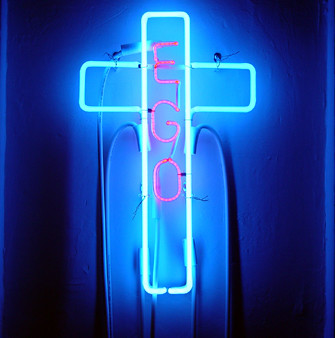
In my opinion, Richard Rohr has beautifully expressed in the above quotation the often-missed message that the cross of Jesus holds for us today.  As long as the ego is running things, we are always looking for someone to die in our place.  It's what happened to Jesus in those days, and it happens afresh inside of us when we trample underfoot and sacrifice the Christ consciousness by allowing the ego to rule our lives. 


Thursday, April 14, 2011

SCIENCE AND NON-DUALITY

I have been pondering the subject of nonduality for quite some time now.  It's something I know is true, but can't quite seem to wrap my mind around! The following, from the Science and Nonduality Website, has been very helpful:

"Nonduality is the philosophical, spiritual, and scientific understanding of non-separation and fundamental intrinsic oneness.

"For thousand of years, through deep inner inquiry, philosophers and sages have came to the realization that there is only one substance and we are therefore all part of it. This substance can be called Awareness, Consciousness, Spirit, Advaita, Brahman, Tao, Nirvana or even God. It is constant, ever present, unchangeable and is the essence of all existence.

"In the last century Western scientists are arriving at the same conclusion: The universe does indeed comprise of a single substance, presumably created during the Big Bang, and all sense of being - consciousness - subsequently arises from it. This realization has ontological implications for humanity: fundamentally we are individual expressions of a single entity, inextricably connected to one another, we are all drops of the same ocean.

"Science and Nonduality is a journey, an exploration of the nature of awareness, the essence of life from which all arises and subsides.

What is nonduality, anyway?
"There are many shades of meaning to the word nonduality. As an introduction, we might say that nonduality is the philosophical, spiritual, and scientific understanding of non-separation and fundamental oneness.

"Our starting point is the statement “we are all one,” and this is meant not in some abstract sense but at the deepest level of existence. Duality, or separation between the observer and the observed, is an illusion that the Eastern mystics have long recognized and Western science has more recently come to understand through quantum mechanics.

"Dualities are usually seen in terms of opposites: Mind/Matter, Self/Other, Conscious/Unconscious, Illusion/Reality, Quantum/Classical, Wave/Particle, Spiritual/Material, Beginning/End, Male/Female, Living/Dead and Good/Evil. Nonduality is the understanding that identification with common dualisms avoids recognition of a deeper reality.

So how can we better understand nonduality?


"There are two aspects to this question, and at first glance they appear to be mutually exclusive, although they may be considered two representations of a single underlying reality.

"The first aspect is our understanding of external reality, and for this we turn to science. The word science comes from the Latin scientia, which means knowledge. The beauty and usefulness of science is that it seeks to measure and describe reality without personal, religious, or cultural bias. For something to be considered scientifically proven, it has to pass exhaustive scrutiny, and even then is always subject to future revision. Inevitably human biases creep in, but the pursuit of science itself is intrinsically an evolving quest for truth. But then quantum mechanics turned much of this lauded objectivity on its head, as the role of the observer became inseparable from the observed quantum effect. It is as if consciousness itself plays a role in creating reality.  Indeed, the two may be the same thing. As quantum pioneer Niels Bohr once put it: “A physicist is just an atom's way of looking at itself!”

"The second aspect is our inner, personal experience of consciousness, our “awareness of awareness.” We have our senses to perceive the world, but “behind” all perception, memory, identification and thought is simply pure awareness itself.  Eastern mystics have described this undifferentiated consciousness for thousands of years as being the ultimate state of bliss, or nirvana. Seekers have attempted to experience it for themselves through countless rituals and practices, although the state itself can be quite simply described. As Indian advaita teacher Nisargadatta Maharaj said: “The trinity: mind, self and spirit, when looked into, becomes unity.”

"The central challenge to understanding nonduality may be that it exists beyond language, because once it has been named, by definition -- and paradoxically -- a duality has been created. Even the statement “all things are one” creates a distinction between “one” and “not-one”! Hardly any wonder that nonduality has been misunderstood, particularly in the West."

Humm, maybe that's why ancient orthodox Jews would never say the name of God, and

The tao that can be told
is not the eternal Tao.
The name that can be named
is not the eternal Name.

Monday, March 21, 2011

RELIGION: INSIDE AND OUT


The following article by Corey W. deVos was posted at Integral Life.  The website contains a wealth of articles, videos, and audios - some for free and some that can be accessed for a $10.00 monthly membership fee.  Good stuff!


ex·o·ter·ic
Pronunciation: \ek-sə-ˈter-ik\
Function: adjective
Etymology: Latin & Greek; Latin exotericus, from Greek exōterikos, literally, external, from exōterō more outside, comparative of exō outside Date: 1660
1 a : suitable to be imparted to the public <the exoteric doctrine>
b : belonging to the outer or less initiate circle
2 : relating to the outside

es·o·ter·ic
Pronunciation: \ˌe-sə-ˈter-ik, -ˈte-rik\
Function: adjective Etymology: Late Latin esotericus, from Greek esōterikos, from esōterō, comparative of eisō, esō within, from eis into; akin to Greek en in Date: circa 1660
1 a : designed for or understood by the specially initiated alone <a body of esoteric legal doctrine — B. N. Cardozo>
b : requiring or exhibiting knowledge that is restricted to a small group <esoteric terminology>; broadly : difficult to understand <esoteric subjects>
2 a : limited to a small circle <engaging in esoteric pursuits>

It has often been said that there is a central paradox in the role of religion throughout history: on the one hand, religion has been the single greatest cause of war and suffering. On the other, religion has been the single greatest source of redemption, salvation, and liberation for humanity. How can we possibly make sense of this double-edged dagger? How can we reconcile the very best qualities of religion with the very worst?
 
Any meaningful discussion about religion must take at least two different dimensions of the religious experience into account. First, there is religion in its exoteric or "outer" form, largely consisting of the rituals, beliefs, and dogma of a particular tradition. This is what the majority of people think of when they hear the word "religion", often associating it with old myths, pre-rational thinking, and obsolete ideologies. Whenever you hear Richard Dawkins, Christopher Hitchens, or any of the other "new atheists" railing against God and religion, it is always this mythic exoteric form that they are attacking.
 
There is another side to religion which, by definition, is very often overlooked: the esoteric or "inner" core that invites us to actually experience divinity for ourselves. This esoteric core is almost entirely composed of vivid (and occasionally enigmatic) descriptions of spiritual devotion, transcendent truths, and timeless realities. But there is so much more than just poetry at the heart of religion—esoteric spirituality represents a very real technology of transformation, offering profoundly enriching practices of meditation and prayer to help us all experience these things for ourselves, rather than just taking it as a matter of faith.
 
Every religion was founded by a mystic who had a direct experience of spiritual reality, whether we are talking about Christianity, Buddhism, Islam, Hinduism, Sufism, or any other major spiritual tradition. And every religion has been populated by various saints and sages throughout the years, all of whom have helped to deepen and refine these teachings and practices, as well as re-translate them for new generations.
 
And yet, as prevalent as genuine mysticism is in all these traditions, many people in today's world go their entire lives without ever hearing about these aspects of religious experience. Oftentimes Western spiritual seekers look beyond the religion of their childhood, usually to exotic Eastern traditions like Zen Buddhism or Taoism, because they perceive these traditions as being steeped in the esoteric—not realizing that Eastern spirituality is just as bound to the ritualistic trappings of exoteric religion as Christianity, Judaism, or Islam. They often do not even recognize the rich legacy of esoteric spirituality that exists in their own tradition, hiding right in plain sight—simply because we are too close to our own cultural preconceptions, too burnt out on the mythic dogma of our childhood, and too alone in the dark without anyone pointing us in the right direction.
 
In fact, once we have tasted the esoteric waters in another spiritual tradition, we usually intuit that this very same esoteric core is shared by all religions, that it is the cornerstone of spiritual experience for every mystic in history (though expressed very differently from culture to culture). We begin to recognize these timeless teachings in our own native tradition, allowing us to "come home" to the religion of our upbringing with open eyes, open hearts, and open minds. From exoteric to exotic to esoteric—this has been the path for a great many spiritual seekers in the 20th and 21st century.
 
When considering the relationship between the exoteric and esoteric aspects of religious life it is tempting to regard them as being pitted against one another, an antagonistic dyad of gnosis vs. faith, of experience vs. dogma, of mysticism vs. myth. But it is important to remember that both these dimensions of religion are crucial—after all, it is the institutional aspects of religion that make it possible to contain, codify, and perpetuate the esoteric teachings over multiple generations. If we did not have our exoteric forms of religion, the innermost contemplative teachings would have been lost hundreds, if not thousands of years ago.
 
The central problem of religion today is not the unavailability of esoteric teachings—they are just as accessible today as they have ever been, perhaps even more so—but that our exoteric religions have become damaged, painfully decoupled from history's ceaseless march toward more novelty and more complexity. Our religions are fully capable of keeping pace with our progress, growing from magic forms of religion to mythic forms, rational forms, pluralistic forms, integral forms, and beyond. And the esoteric teachings and practices are alive in all these forms, though will certainly be interpreted very differently at each level (e.g. Christ the magician, Christ the Lord of the Chosen, Christ the humanist, Christ the Lover of all sentient beings, and Christ the living embodiment of the intersection of humanity and divinity within each of us).
 
But for a number of historic reasons, the majority of today's religions have remained anchored in magic and myth, and have been largely unable to blossom into their rational and post-rational forms. Because of this failure to grow and adapt, a great disservice has been done to the modern and post-modern God, and a great many people have dug their trenches in a perceived war between science and religion—trenches that few will ever be able to climb out of. We are now caught in the crossfire between two very different kinds of fundamentalism—religious evangelicals vs. scientific materialists—in which the former believes all facts to be an affront to faith, while the latter believes that all conceptions of the spiritual life are just childish vestiges of a long-dead God. But it is an imaginary war, a frantic struggle of straw man vs. straw man, neither side willing (or capable) of any sort of integrative compromise.
 
As a result, too many people on the religious side are forced to suppress their own growth or compartmentalize their beliefs (otherwise rational people unable to apply the same reason they use in the rest of their lives to their religious convictions), while those on the scientific side tend to demonize spirituality altogether—throwing all of our accumulated conceptions of transcendence, liberation, and redemption out with the bathwater of myth and magic. The goal is not to supplant exoteric religion with the esoteric, but to create healthy exoteric institutions that can continue to carry and transmit the esoteric teachings into the modern and postmodern worlds.
 
These are arguably the two most important tasks of religion in the 21st-century. The first is to fix our broken religious institutions, creating genuine rational approaches to spirituality in all of our major traditions that can actually meet people where they are while nurturing their growth through magical, mythical, rational, postmodern, and integral stages of development. This alone would help relieve the incredible cultural tension that currently exists between religion and science, closing the massive gap that between faith and reason. The second is to revive the esoteric teachings at the core of every religion for an entirely new generation of spiritual seekers, practitioners, and church-goers. By bringing the transformative practices of contemplation, meditation, and prayer to the forefront of worship, we can begin tapping into a very real technology of liberation, offering an alternative to blind faith by allowing people to experience for themselves the effulgent divinity of the world, of our relationships, and of our own blessed hearts and minds.